Case Size: 34mm
Caliber: Bumper Automatic Cal. P812
Year: 1950s
Lug Width: 17mm
Case Material: Gold-Plated
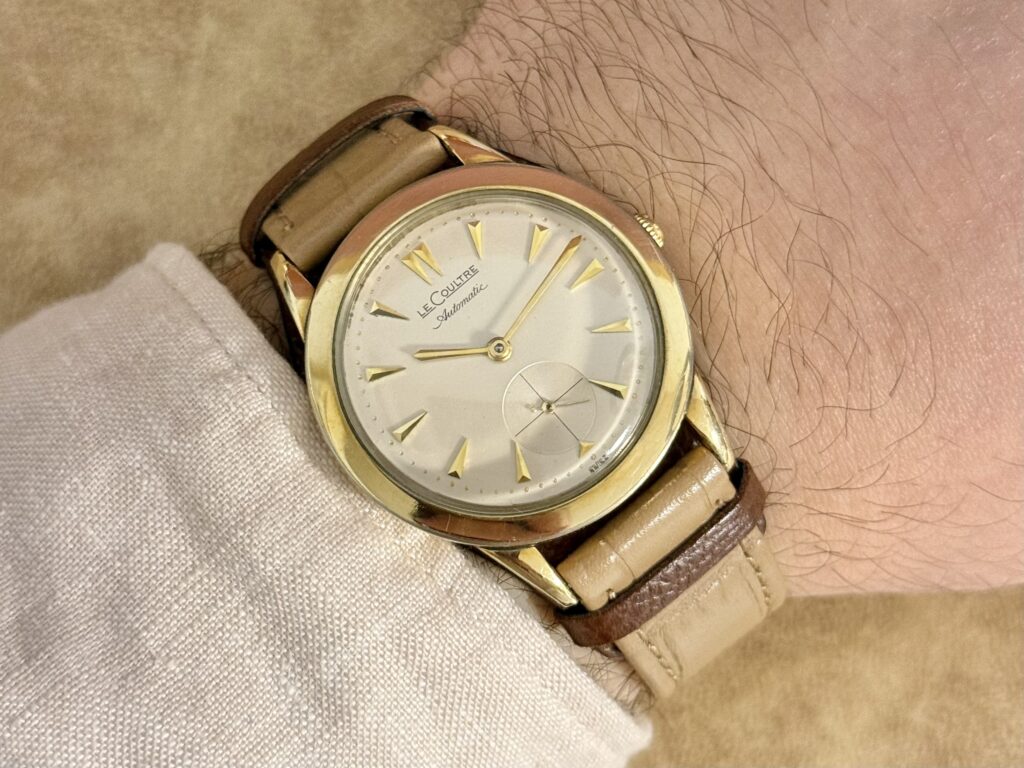
Dial: Warm Beige Dial, Wedge Indexes, Softly Curved Sword Hands
Overall Impression
This is a 1950s Jaeger-LeCoultre fitted with the Cal. P812 and signed “LeCoultre” on the dial.
Its dial shifts between soft beige and champagne gold as the light changes, complemented by a gold-plated case that suits the warm palette well. Measuring 34mm across, it reflects the restrained proportions typical of the period.
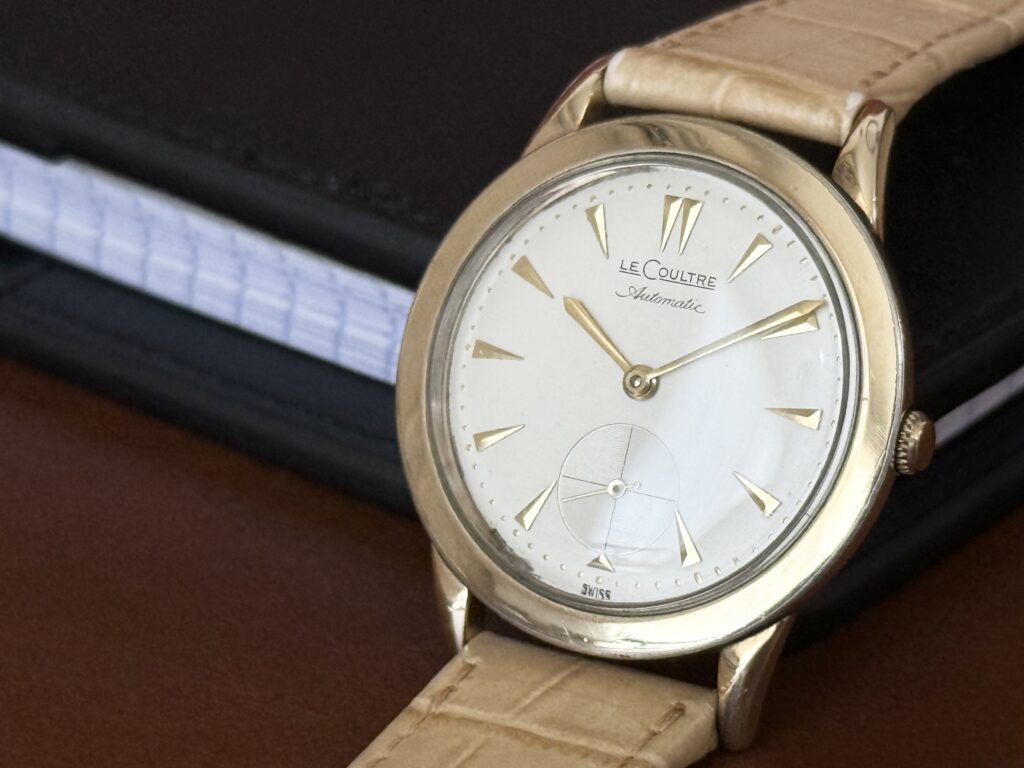
The watch is in very good condition. The case shows honest signs of wear, while the dial, hands, and indexes remain remarkably well preserved, retaining much of their original finish and definition.
For a watch approaching 75 years of age, its overall condition is particularly impressive.
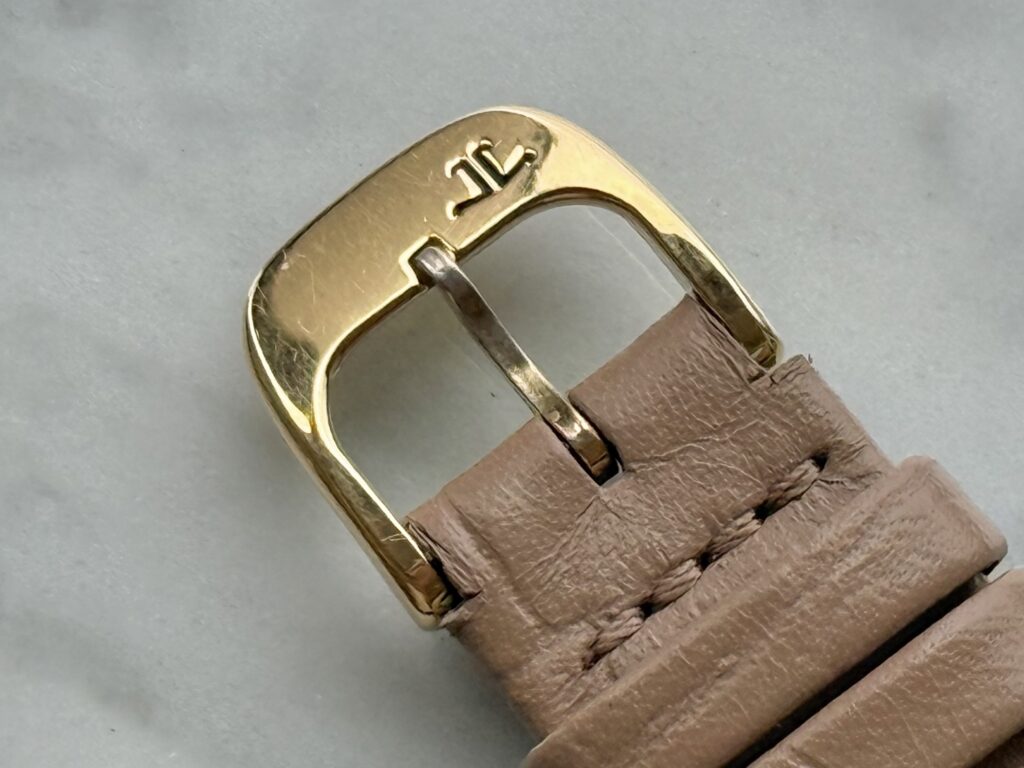
Another detail is what appears to be the original gold-plated Jaeger-LeCoultre buckle. While not a particularly noticeable feature, details like this give the watch a greater sense of consistency and add to its appeal as a vintage piece.
The watch features a screw-back case. Despite its dress-watch styling, this construction gives it a more practical feel.
The Story Behind the “LeCoultre” Signature
Rather than “Jaeger-LeCoultre,” the dial is signed simply “LeCoultre.”
During the 1950s, this signature was primarily used on watches intended for the American market, despite being produced by the same Swiss manufacturer known today as Jaeger-LeCoultre.
At the time, U.S. tariff regulations influenced how many Swiss watches were manufactured and imported. Movements were produced in Switzerland, while cases and part of the final assembly were completed in the United States.
LeCoultre-signed watches reflect the export arrangements and market conditions of the period. Rather than simply being a different name on the dial, they also reflect part of the brand’s history.
Movement
A Transitional Automatic Movement
Developed during the early years of automatic watchmaking, the Cal. P812 uses Jaeger-LeCoultre’s bumper automatic system.
Unlike the full-rotor systems found in most modern automatic watches, the weighted rotor travels through a limited arc, winding the movement as it gently rebounds against springs inside the case.
By modern standards, the system is less efficient than a full rotor, but it offers a noticeably different wearing experience.
• The rotor produces a subtle rebound that can occasionally be felt on the wrist.
• Its movement has a mechanical character unique to early automatic watches.
That distinctive sensation is one of the defining traits of bumper automatics and remains part of their appeal among vintage watch enthusiasts.
Conclusion
With its warm dial, the history behind the “LeCoultre” signature, and the distinctive feel of its bumper automatic movement, this watch brings together many of the characteristics found in Jaeger-LeCoultre watches from the 1950s.
It is a watch that lets you enjoy the atmosphere and presence that only a vintage watch can offer.