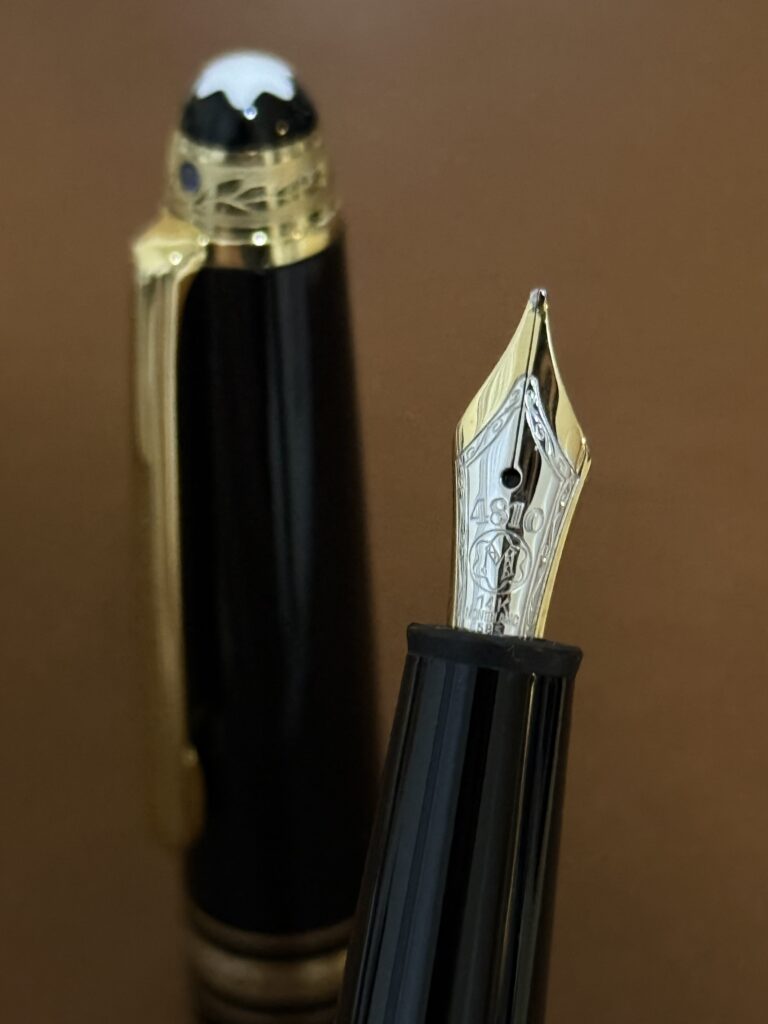
Founded by George Safford Parker in 1888, Parker is a traditional writing instrument brand with a history spanning more than a century. From classic fountain pens to everyday ballpoint pens, the company has developed a wide range of writing instruments, incorporating the technologies and design sensibilities of each era.
Over the course of Parker’s history, several models have helped establish the brand’s reputation and brought new ideas to the technology and design of writing instruments. The Duofold drew attention with its bold, substantial design; the Vacumatic introduced an innovative filling mechanism; the Parker 51 became known for its streamlined shape; and the Jotter found widespread popularity as an everyday ballpoint pen. Each model reflects the era in which it was developed and the needs and expectations people had of writing instruments at the time.
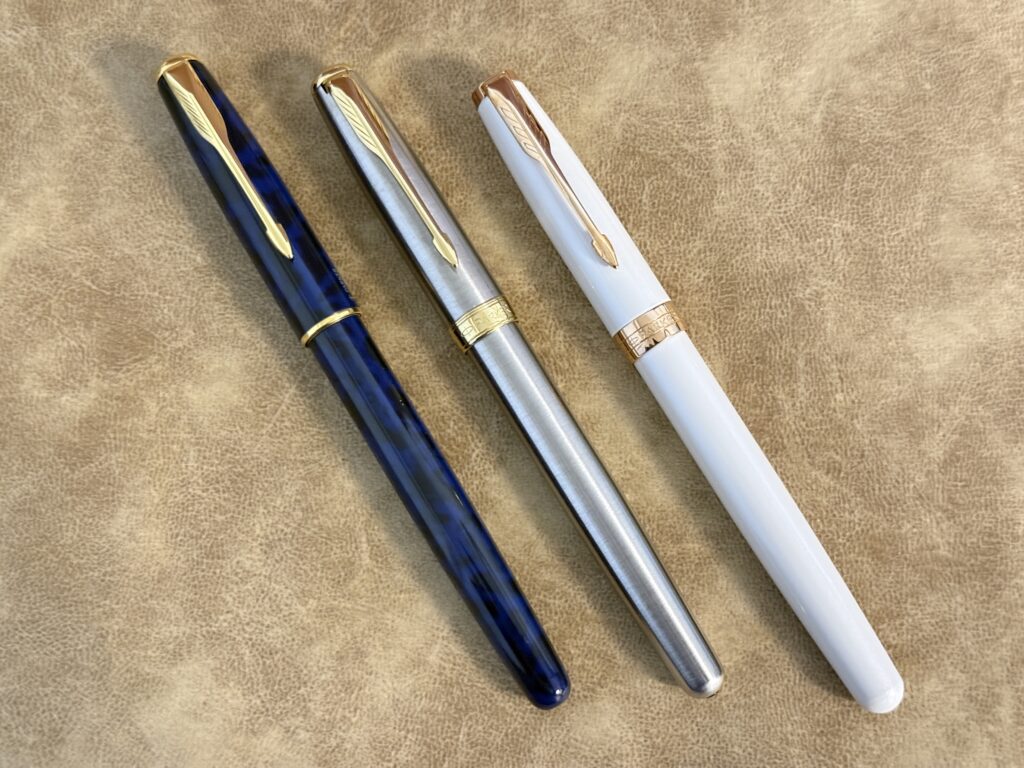
In this article, I’ll trace Parker’s history and look at some of its most notable models, as well as the Sonnet collection. I’ll also introduce three Sonnet ballpoint pens from my own collection: navy marble, pearl white with rose gold, and a silver-and-gold two-tone finish. Through these three pens, each with its own distinctive color and finish, I’ll explore how different designs can emerge within the same collection.
The History of Parker
The Founding of Parker
Parker was founded in the United States in 1888 by George Safford Parker. Before establishing the company, Parker worked as a teacher of telegraphy. He believed that the writing instruments available at the time could be improved.
Pens of the era had several shortcomings, including problems with ink leakage and durability. Parker studied pen construction and continued refining his designs in an effort to address these issues. In 1894, he patented the Lucky Curve, a system that curved the ink feed to help return excess ink to the inside of the pen. The mechanism was designed to reduce leakage when a pen was left unused.
Parker continued developing its products, refining ink feeds and filling mechanisms and experimenting with different materials. These efforts helped lay the groundwork for later models such as the Duofold, Vacumatic, and Parker 51.
Innovation and Design
Parker’s history reflects changes not only in the functionality of writing instruments but also in their appearance and materials.
From the early to the mid-20th century, fountain pens evolved into everyday writing tools, with advances in filling mechanisms, materials, and portability. Parker was part of this broader development, introducing a range of innovations, including mechanisms designed to reduce ink leakage, systems that increased ink capacity, more durable materials, and streamlined shapes that reflected the design sensibilities of their time.
As ballpoint pens became more widespread, expectations for writing instruments also expanded. Drawing on the technical knowledge and design principles developed through its fountain pens, Parker began offering ballpoint pens intended for everyday use, including the Jotter.
⸻
Iconic Parker Models
Four models are particularly worth exploring when looking at Parker’s history: the Duofold, Vacumatic, Parker 51, and Jotter. Each has its own distinctive characteristics in terms of design, mechanism, and intended use.
Parker Duofold
The Parker Duofold is a historic fountain pen introduced in 1921. It was launched as one of Parker’s larger, bolder, and more expensive models at the time.
One of the most recognizable versions of the Duofold is the Big Red, with its vivid orange finish. Its eye-catching color and substantial form helped make it widely known. Another notable feature was Parker’s 25-year guarantee, which applied to the original models, not modern reissues such as today’s Duofold.
The materials used in the Duofold also evolved over time. Early models were made from hard rubber, but by the mid-1920s, versions made from Permanite, a more crack-resistant plastic, had appeared. Parker also ran advertising campaigns emphasizing the durability of the material. As a result, the Duofold became known not only for its design but also for showcasing the newer materials of its era.
The Duofold has continued to be one of Parker’s signature collections.
Parker Vacumatic
Introduced in 1933, the Parker Vacumatic was a fountain pen featuring an innovative filling mechanism. Unlike conventional sac-fillers, it did not use a rubber ink sac. Instead, its mechanism drew ink directly into the barrel. Operating the plunger at the end of the pen drew ink into the reservoir, allowing the Vacumatic to hold more than twice as much ink as typical pens of the time, according to Parker’s own materials.
Other distinctive features included a transparent section that made it possible to check the ink level and striped patterns along the barrel. Combining practical innovations with a distinctive appearance, the Vacumatic remains an important model in Parker’s history.
Parker 51
The Parker 51 was introduced in 1941. It had been developed between 1939 and 1940, and its name was chosen in reference to the 51st anniversary of Parker’s founding.
Its streamlined design drew inspiration from the aerodynamic forms of aircraft. Another defining feature was its hooded nib, which conceals most of the nib beneath the pen’s hood. Unlike the exposed nibs commonly seen on earlier fountain pens, this design gives the pen a smooth, continuous silhouette.
Parker’s own historical materials present the Parker 51 as a model that brought a fresh approach to writing instrument design. It received considerable recognition for its appearance, including a Design Award from the Fashion Academy, further demonstrating the acclaim it received.
The Parker 51 remained in production for many years and became one of the brand’s best-known models. Today, it can still be found in the vintage writing instrument market and continues to attract enthusiasts interested in its distinctive shape and design.
Parker Jotter
The Parker Jotter was introduced in 1954. It extended Parker’s expertise and brand identity beyond fountain pens into a ballpoint pen designed for everyday writing.
The Jotter sold 3.5 million units in its first year, marking a major success. Its compact size and simple design were complemented by a push-button mechanism. The convenience of being able to use the pen at a moment’s notice made it well suited to everyday writing.
The Jotter remains one of Parker’s signature ballpoint pens. Offering a different writing experience from a fountain pen, it has become a defining everyday model in Parker’s lineup.
⸻
The Parker Sonnet Collection
The Sonnet collection was introduced in the early 1990s. Built around a classic shape, it includes models in a wide variety of colors and finishes.
Notable finishes include Ciselé, featuring finely engraved patterns; lacquered finishes in a range of colors; and designs that emphasize the natural look and texture of metal.
The patterns, colors, and finishes of the metal components vary from model to model, giving each Sonnet a distinct appearance.
Some versions combine subdued colors with understated decoration, while others create a more striking look through brighter colors or contrasting metal finishes. This breadth of choice is one of the Sonnet collection’s defining attractions.
The three Sonnet ballpoint pens in my collection also have distinct colors and finishes: a navy-toned marble pattern, pearl white with rose gold, and a silver-and-gold two-tone design. Although they belong to the same collection, each has its own character, shaped by its color and surface finish.
My Three Parker Sonnet Ballpoint Pens
1. Parker Sonnet — Model 111Y, Navy Marble
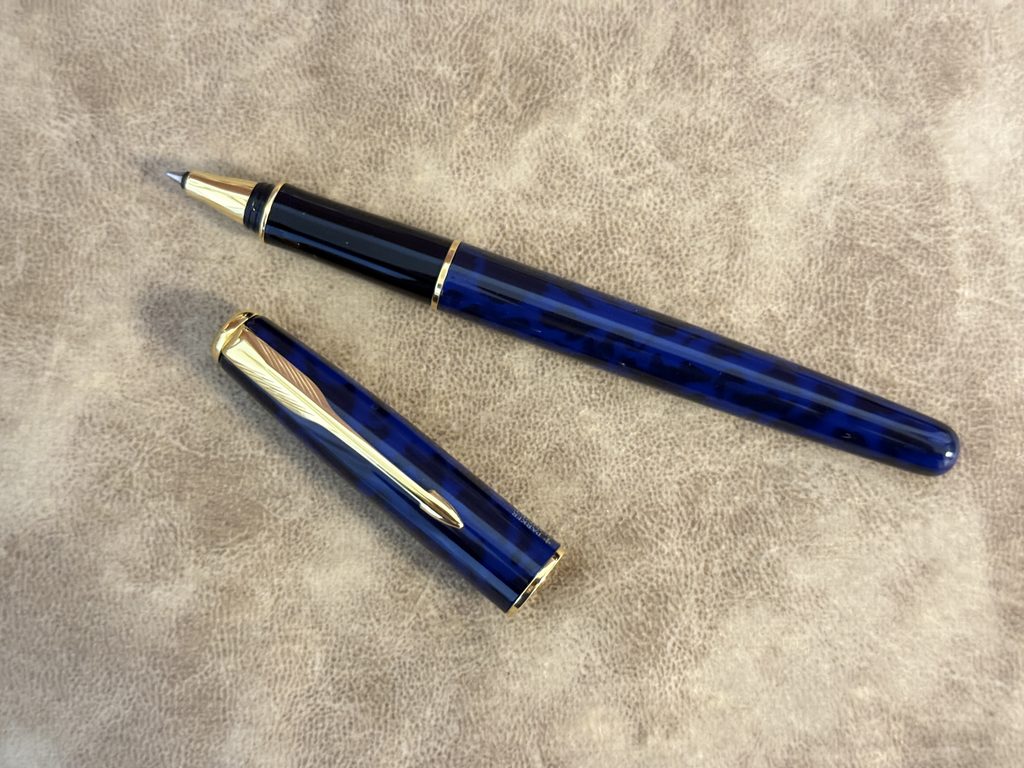
The first pen I’d like to introduce is a Sonnet marked Model 111Y. It features a navy-toned marble pattern, with variations in shade throughout the deep blue finish.
Unlike a solid-color finish, the marble pattern creates visual variation across the surface, and the pen’s appearance shifts subtly depending on the angle from which it is viewed. The dark navy base gives it a restrained, understated look, while the pattern keeps it from feeling plain.
Parker was founded in the United States, but its manufacturing arrangements have changed over the course of its long history.
This particular navy marble pen was made in France. Its classic shape and subdued colors give it an understated character, while the marble finish adds a touch of individuality.
2. Parker Sonnet — Pearl White and Rose Gold
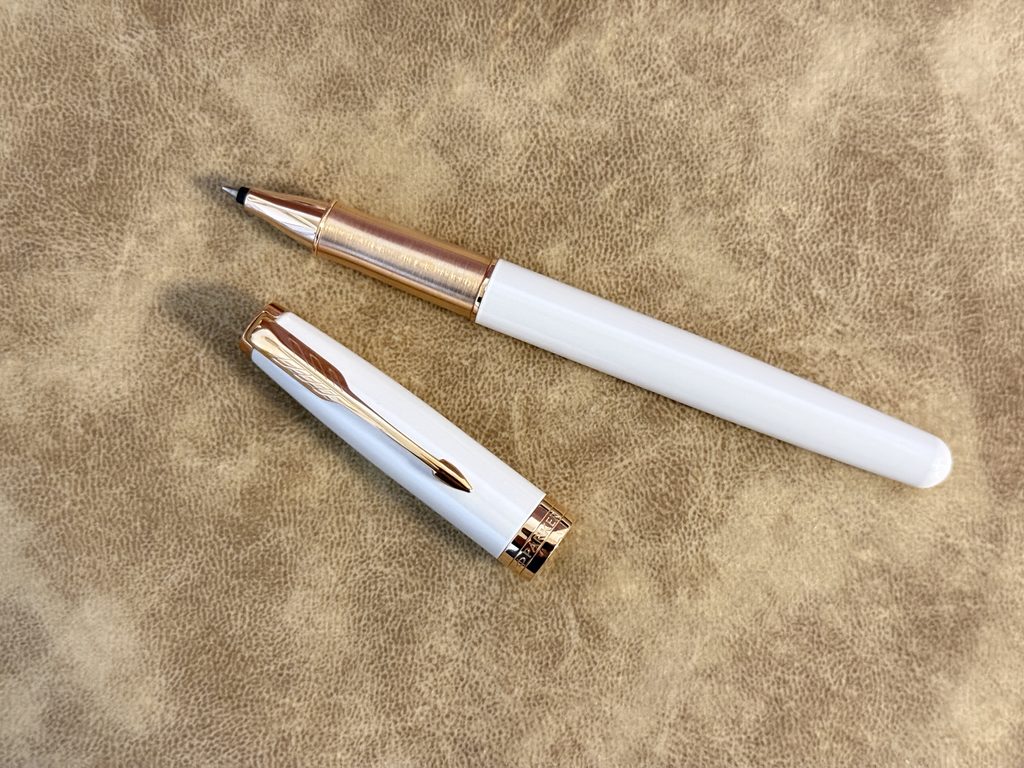
The second pen combines a pearl-white finish with rose gold-colored details.
Where the navy marble model has a more subdued character created by its deep color and pattern, this one stands out for its lighter color and warm metallic accents. The pearlescent surface catches the light, creating a soft visual effect, while the rose gold-colored details add a touch of elegance.
It retains the Sonnet’s familiar shape, but the combination of colors and finishes gives it a brighter, more decorative appearance. Placed alongside the navy marble model, it clearly shows how much the overall impression can change with a different color scheme, even when the basic design remains the same.
3. Parker Sonnet — Silver and Gold Two-Tone
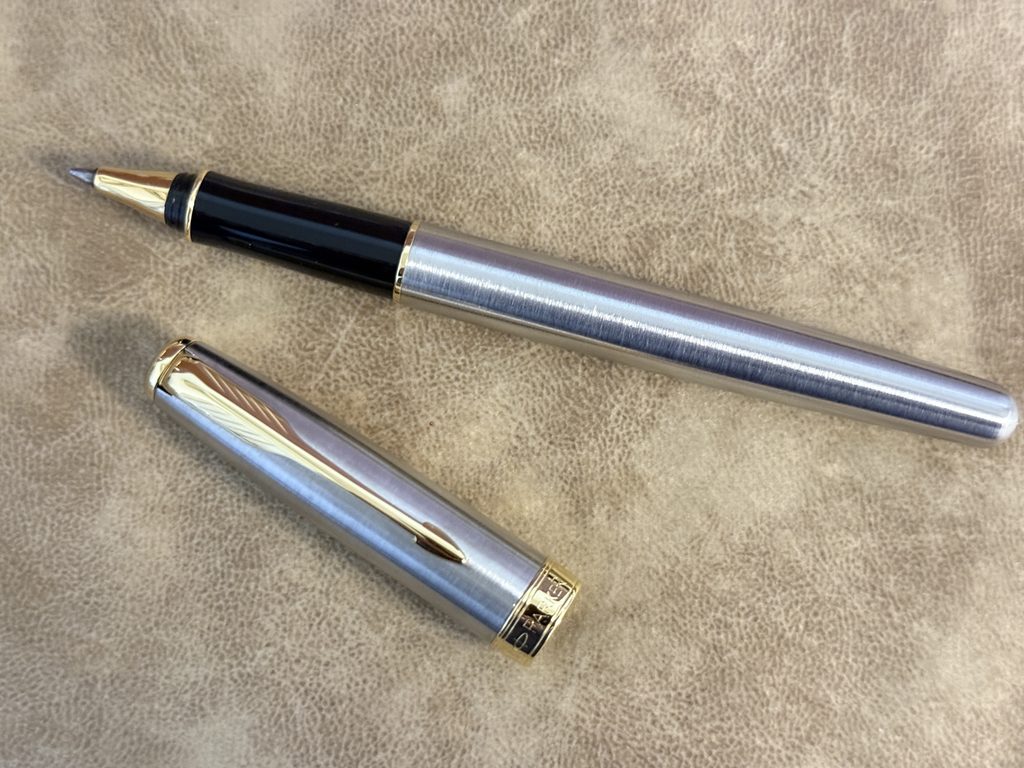
The third pen features a combination of silver and gold.
The restrained sheen of the silver finish is complemented by gold-colored accents, creating a design that feels classic while still having a decorative quality. The contrast between the two colors is distinct, yet the overall shape remains clean and balanced, in keeping with the Sonnet’s characteristic silhouette.
I also appreciate how easy this pen is to use every day. Perhaps because of its surface finish, fine scratches seem less noticeable than they do on the other two pens, making it easier to reach for without worrying too much about wear.
Its traditional pen shape, refined design, and everyday practicality come together in a way that makes this one of my favorites.
Conclusion
From historic fountain pens such as the Duofold and Vacumatic to the distinctive shape of the Parker 51 and the practical Jotter ballpoint pen, Parker has produced a wide range of writing instruments over the years. Looking at these models reveals how the company incorporated different innovations in filling mechanisms, materials, design, and usability as the needs of each era changed.
The Sonnet collection draws on this history while offering a wide variety of colors and finishes. Although the basic shape remains consistent, differences in surface patterns, colors, and metal finishes can significantly change the overall appearance of each pen.
The three pens in my collection—the navy marble, pearl white with rose gold, and silver-and-gold two-tone models—each have their own distinctive character. Beyond simply displaying them side by side, I enjoy being able to choose which one to use depending on my mood or the occasion. That, too, is part of the pleasure of collecting pens with different finishes.
Learning about Parker’s history also offers a new way to appreciate the design and practical innovations carried through to its current models. Understanding the background of a brand’s iconic writing instruments can change the way we look at the pens we own. It may even reveal something new about a pen we use every day.